
Kitchen Cleaning for Toronto Condos: Unique Challenges & Solutions
If you live in a Toronto condo, you’ve probably noticed that keeping your kitchen clean can be more challenging than in a detached home or townhouse. Smaller layouts, weaker ventilation, and shared building systems all contribute to grease, grime, and odors building up faster
Whether you’re in downtown Toronto, Mississauga, Markham, or North York, understanding these common challenges makes it much easier to keep your kitchen fresh and clean. Have you noticed how quickly cooking smells seem to linger?
If you live in a Toronto condo, you’ve probably noticed that keeping your kitchen clean can be more challenging than in a detached home or townhouse. Smaller layouts, weaker ventilation, and shared building systems all contribute to grease, grime, and odors building up faster
Why Condo Kitchens Get Dirty Faster Than Detached Homes
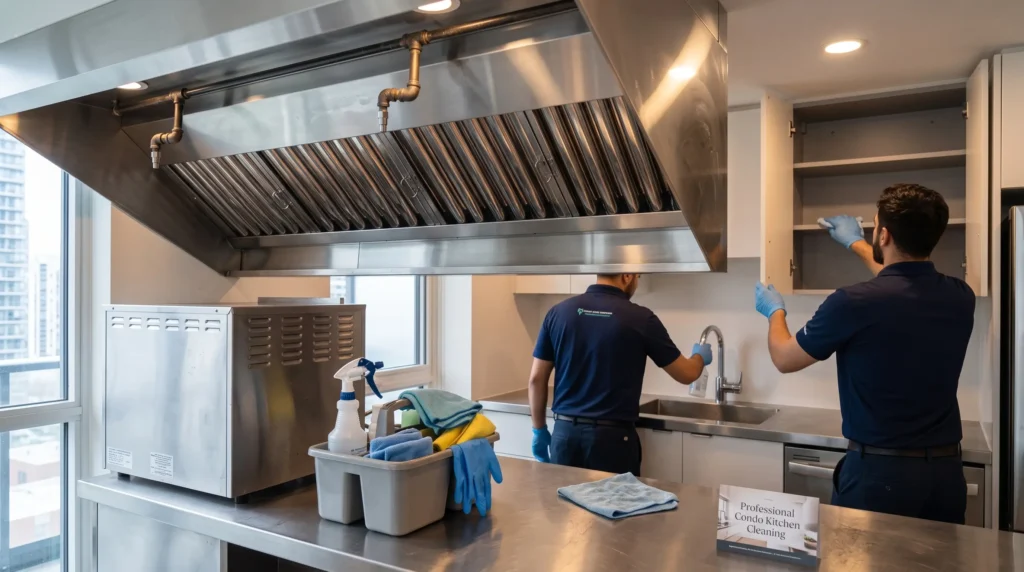
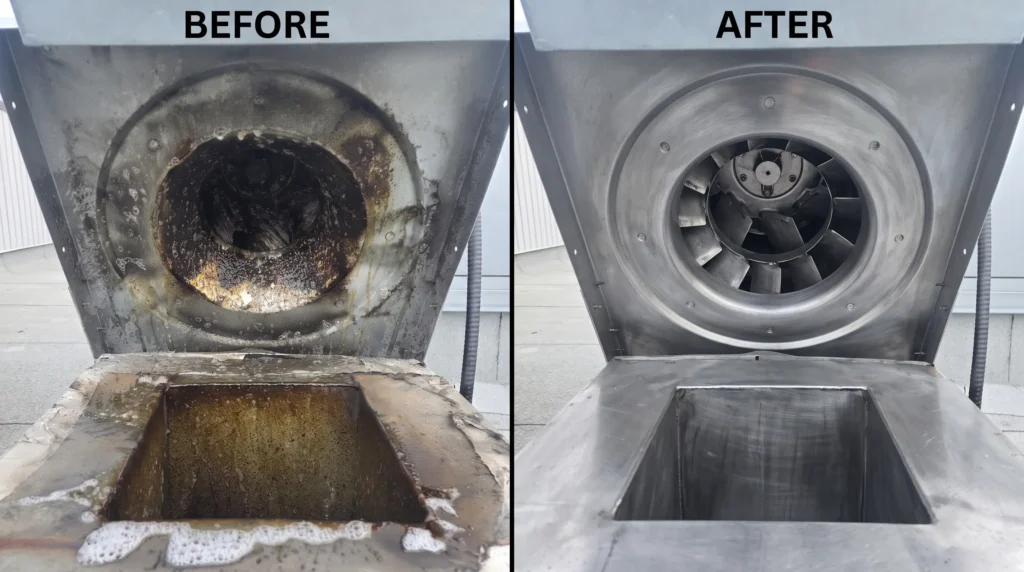
If you’ve ever noticed a sticky film on your kitchen cabinets, airflow is usually the reason. Most condo kitchens in Toronto rely on a single exhaust fan above the stove, and in many buildings, that fan is not strong enough to fully remove cooking smoke and grease particles from the air.
Instead of venting everything outside, some of that residue settles back onto cabinets, countertops, and even the walls near the kitchen. Detached homes with better ventilation and more open layouts simply do not experience this buildup as quickly.
Common Kitchen Cleaning Challenges in Toronto Condos
Condo kitchens face unique cleaning challenges compared to detached homes. Limited space, reduced airflow, hard water, and shared building systems all contribute to faster grease, grime, and odor buildup.
01
Weak or Recirculating Exhaust Fans
Grease buildup caused by limited ventilation.
Weak or Recirculating Exhaust Fans
Grease buildup caused by limited ventilation.
The Problem
Many condo range hoods recirculate air instead of venting it outdoors. As a result, grease particles remain inside the unit and gradually settle on nearby cabinets, walls, and countertops.
The Solution
Clean filters monthly and schedule periodic degreasing of nearby surfaces to prevent buildup from becoming difficult to remove.
02
Limited Kitchen Space
Compact layouts lead to faster surface buildup.
Limited Kitchen Space
Compact layouts lead to faster surface buildup.
The Problem
In smaller kitchens, grease, moisture, and food particles spread more quickly because appliances, cabinets, and countertops sit much closer together.
The Solution
Clean surfaces immediately after cooking and focus on areas nearest the stove where residue collects first.
03
Hard Water Buildup on Fixtures
Mineral deposits become visible very quickly.
Hard Water Buildup on Fixtures
Mineral deposits become visible very quickly.
The Problem
Hard water minerals accumulate around faucets, sinks, and fixtures, leaving visible spots and dulling finishes over time.
The Solution
Weekly descaling prevents mineral buildup and professional cleaning can restore heavily affected surfaces.
04
Lingering Cooking Odors
Smells remain trapped in smaller living spaces.
Lingering Cooking Odors
Smells remain trapped in smaller living spaces.
The Problem
Fish, spices, and fried foods often leave odors behind when airflow is limited.
The Solution
Clean filters, cabinets, and refrigerators regularly and allow ventilation systems to run longer after cooking.
05
Pest Prevention in Shared Buildings
Food residue can attract pests across units.
Pest Prevention in Shared Buildings
Food residue can attract pests across units.
The Problem
Shared walls, plumbing, and ventilation systems can allow pest issues to spread through buildings.
The Solution
Deep cleaning around sinks, stoves, and appliances removes food sources that attract pests.
06
Limited Storage Space
More visible clutter means more exposed surfaces.
Limited Storage Space
More visible clutter means more exposed surfaces.
The Problem
Smaller kitchens often require countertops to be used for storage, increasing dust and grease exposure.
The Solution
Periodic cleaning of cabinet interiors and hidden storage areas prevents overlooked buildup.
Recommended Cleaning Frequency for Toronto Condo Kitchens
If you cook regularly in a Toronto condo, a professional deep clean every two to three months is usually the best way to stay ahead of grease and grime because of the ventilation and space challenges. By comparison, detached homes often do well with a deep clean every three to four months. If your kitchen sees heavy daily cooking or relies on a recirculating exhaust fan, you may need more frequent cleaning to keep buildup under control.
Final Thoughts on Condo Kitchen Cleaning in Toront
If you live in a condo, your kitchen likely faces a unique mix of challenges that detached homes usually do not experience to the same extent, from limited ventilation to hard water buildup in a compact space. Understanding these issues makes it much easier to create a cleaning routine that keeps up with how quickly a condo kitchen gets dirty. After all, staying on top of small messes is often much easier than dealing with a major cleanup later.
Frequently Asked Questions About Condo Kitchen Cleaning in Toronto
Do condo kitchens really need cleaning more often than houses?
In most cases yes, mainly because of weaker ventilation and smaller layouts that cause grease and moisture to concentrate faster than in a detached home.
What’s the biggest cleaning challenge specific to Toronto condos?
Recirculating exhaust fans tend to be the biggest issue, since they don’t fully remove cooking grease and smoke from the air, leaving residue on nearby surfaces over time.
Can a professional cleaning service fix a recirculating exhaust fan problem?
A professional cleaning can’t change the ventilation system itself, but regularly cleaning the filter and degreasing nearby surfaces significantly reduces the buildup the weak airflow leaves behind.