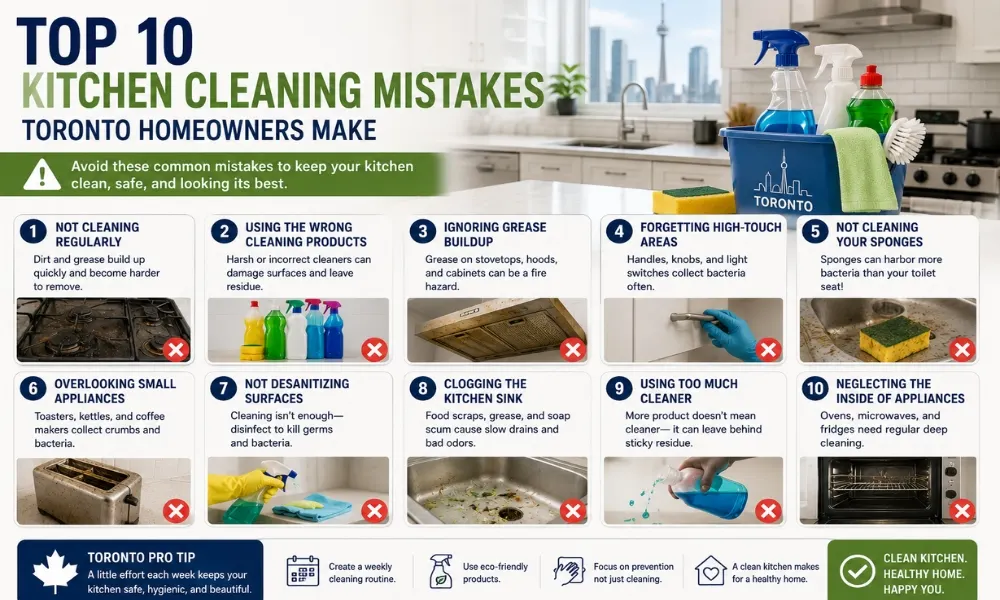
Top 10 Kitchen Cleaning Mistakes Toronto Homeowners Make
It’s easy for Toronto homeowners to take pride in keeping their homes clean and comfortable. But even the most careful homeowners can unknowingly damage surfaces, spread bacteria, or spend hours on cleaning routines that do not work properly because of a few common kitchen cleaning mistakes.
Whether you live in a detached home in Etobicoke, a semi in East York, or a condo in downtown Toronto, these mistakes can happen in kitchens everywhere. The good news is that once you know what to avoid, making better cleaning choices is simple. After all, small changes can make a big difference.
Here are the top 10 kitchen cleaning mistakes Toronto homeowners make and exactly what to do instead.
Mistake 1: Using Bleach or Vinegar on Natural Stone Countertops
It’s one of the most damaging mistakes found in Toronto kitchens, especially as granite and marble countertops have become more common in renovated homes and condos across the city.
Using bleach or vinegar can slowly harm natural stone because both are acidic or chemically harsh enough to dull and etch the surface. Over time, you may notice your countertop losing its shine, developing rough areas, or showing signs of discoloration. Once the protective sealant on granite or marble is damaged, the stone becomes more porous and much harder to keep clean.
What to do instead: Use a pH-neutral stone cleaner made specifically for granite or marble. For everyday cleaning, warm water with a small amount of mild dish soap is a safe choice. Resealing your stone countertops once a year can also help maintain their protective barrier and keep them looking their best.
Mistake 2: Using Bleach or Vinegar on Natural Stone Countertops
It is easy to overlook your kitchen exhaust fan because it sits quietly above the stove, but ask most Toronto homeowners when they last cleaned it and you may get a surprised look. This hidden area collects grease faster than many other surfaces in the kitchen, especially with regular cooking.
A clogged grease filter does more than reduce ventilation. It can become a fire risk and push greasy air back into your kitchen and home. During Toronto winters, when windows often stay closed for months, poor ventilation can noticeably affect indoor air quality and comfort.
A simple solution is to clean your exhaust fan filters once a month if you cook often, or every two months for lighter cooking households. For example, soaking aluminium filters in hot soapy water with baking soda for about twenty minutes makes scrubbing easier. After that, rinse them well and wipe the hood exterior with a degreaser spray whenever you clean your stovetop.
Mistake 3: Cleaning the Stovetop With Abrasive Scrubbers
It can be tempting to grab a steel wool pad when food gets baked onto your stovetop, but it can do more harm than good. On glass-ceramic cooktops, which are extremely common in Toronto condos and modern homes, abrasive scrubbers can leave permanent scratches that dull the surface and make future cleaning more difficult.
Even with stainless steel stovetops, scrubbing against the grain with rough pads can create tiny scratches that collect grease and bacteria over time. A simple cleaning mistake today can make your stovetop look worn out sooner than expected.
Instead, use a dedicated ceramic cooktop cleaner with a soft cloth or a razor blade scraper held at a low angle for stubborn spots on glass-ceramic surfaces. For stainless steel, always clean in the direction of the grain using a microfiber cloth or soft sponge to keep the finish looking smooth and fresh.
Mistake 4: Not Cleaning Behind and Under the Fridge
It is easy to forget what is hiding behind your fridge, but that space is a perfect example of an area most people overlook. Many Toronto homeowners go years without moving their fridge, and the buildup behind it can become surprisingly unpleasant. Dust, grease, food debris, and even mold can collect on the coils, floor, and wall behind the appliance.
Dirty condenser coils make your fridge work harder, which can increase your energy bill and reduce the appliance’s lifespan. In many of Toronto’s older homes, the narrow gaps between appliances and walls are especially likely to trap this kind of buildup.
A simple solution is to pull your fridge out every three to four months. Vacuum the condenser coils using a brush attachment, sweep and mop the floor underneath, and clean the wall behind it. While you are there, take a quick look at the water line connection if your fridge has a water dispenser. It is a small maintenance step that can help keep your appliance running smoothly.
Mistake 5: Using the Same Cloth or Sponge Everywhere
It is easy to overlook the kitchen sink because we use it several times a day, but many Toronto homeowners only give it a quick rinse and move on. Over time, food residue, soap scum, and bacteria can build up, including harmful bacteria like E. coli and salmonella from handling raw meat.
The drain is often the most ignored area. Grease, leftover food particles, and soap can collect inside the pipe, causing slow drainage and unpleasant smells. Toronto’s hard water can also leave mineral deposits around the faucet and drain, making the area look dull and dirty.
A simple weekly routine can help. Scrub the sink basin with baking soda and a soft brush, flush the drain with baking soda and vinegar, remove and clean the drain stopper, and wipe the faucet and handles with a cloth soaked in white vinegar to reduce limescale buildup. This is especially useful in Toronto, where moderately hard water can make these deposits a common issue. A few extra minutes of care each week can keep your sink cleaner and fresher.
Mistake 6: Skipping the Weekly Deep Sink Clean
It is easy to forget how much use the kitchen sink gets every day, but many Toronto homeowners only give it a quick rinse and move on. Over time, food residue, soap scum, and bacteria can build up, including E. coli and salmonella from handling raw meat.
The drain is often the most overlooked part. Grease, food particles, and soap can collect inside the pipe, causing slow drainage and unpleasant smells. Toronto’s hard water can also leave mineral deposits around the faucet and drain, which can be frustrating to clean.
A simple weekly routine can make a big difference. Scrub the sink basin with baking soda and a soft brush, flush the drain with baking soda and vinegar, remove and clean the drain stopper, and wipe the faucet and handles with a cloth soaked in white vinegar to help remove limescale buildup. This is a common issue in Toronto because of the city’s moderately hard water supply.
Mistake 7: Letting Spills Sit in the Oven
It is common for people to clean their oven only when smoke from a baked-on spill becomes too hard to ignore. By that stage, the grease has already carbonized and hardened, making it much tougher to remove. Even worse, baked-on grease exposed to high temperatures can release harmful fumes that affect your kitchen’s air quality.
A better approach is to wipe up oven spills as soon as the oven cools after cooking. It takes only thirty seconds and can save you from a long two-hour scrubbing job later. For a monthly deep clean, try using a baking soda paste overnight, then wipe it away in the morning.
It is a simple habit that can make oven maintenance feel much easier. Avoid commercial oven sprays with strong fumes whenever possible, especially in condos and smaller Toronto homes where ventilation may be limited.
Mistake 8: Cleaning Cutting Boards Incorrectly
It is easy to overlook, but cutting boards, especially wooden ones, can become a major source of cross-contamination in home kitchens. Many Toronto homeowners quickly rinse their cutting boards under the tap with soap and assume they are clean. However, bacteria from raw meat, fish, and poultry can settle deep inside the cuts and grooves of wooden boards where a quick wash may not reach.
A better approach is to wash all cutting boards with hot soapy water after every use. For wooden boards, give them a monthly deep clean using coarse salt and half a lemon, then scrub the surface, rinse it, and dry it right away. Never leave wooden boards soaking in water. It is also a good idea to keep separate boards for raw meat and vegetables. Plastic boards can be sanitized in the dishwasher using a hot cycle, which makes regular cleaning much easier.
Mistake 9: Forgetting Cabinet Door Handles and Light Switches
It is easy to overlook these high-touch surfaces, but they are handled dozens of times every day by everyone in the household, often with hands that have just touched raw food, garbage, or come in from outside. Still, they are rarely included in regular kitchen cleaning routines.
Studies consistently show that kitchen handles and light switches can carry much higher bacterial loads than many other surfaces around the home. In a busy city like Toronto, where families often share kitchen spaces and daily routines move quickly, this small detail can make a real difference.
What to do instead: Add cabinet handles, drawer pulls, and light switches to your weekly cleaning routine. A disinfectant wipe or a cloth with diluted all-purpose cleaner takes only a few seconds and helps keep your kitchen fresher and more hygienic, which is something we all appreciate in a shared space.
Mistake 10: Using Too Much Water on Kitchen Floors
It may seem like using a soaking wet mop on the kitchen floor gives a deeper clean, but too much water can actually damage certain floor types over time. In Toronto homes, hardwood and engineered wood kitchen floors are very common, and both can suffer from water damage and warping when exposed to excess moisture repeatedly.
Even tile floors can develop problems when water seeps into grout lines, leading to mold growth and loose grout. A simple change can help: use a damp mop instead of a wet one. Make sure to wring out the mop well before cleaning, especially on sensitive surfaces. For hardwood or laminate floors, apply a suitable floor cleaner with a barely damp microfiber mop and dry the area soon after.
Final Thoughts
It usually comes down to a few common mistakes, such as using the wrong cleaning products, missing hard-to-reach spots, or not cleaning often enough. Once you understand what to avoid, keeping a Toronto kitchen truly clean feels much easier and more efficient.
Start by fixing the two or three mistakes from this list that match your current habits. Simple changes, like choosing the right countertop cleaner or adding a monthly exhaust fan cleaning to your routine, can make a noticeable difference over time. You will see the improvement not only in how your kitchen looks, but also in how fresh and hygienic it feels.