
How to Deep Clean Your Kitchen in Toronto: A Room-by-Room Guide
If you live in Toronto, you already know how quickly a kitchen can go from spotless to messy. Between busy weekday dinners, weekend cooking, and everyday use, your kitchen deals with constant wear and tear. A quick wipe after cooking helps maintain it, but it cannot match the results of a proper deep clean.
Deep cleaning your kitchen is about more than just appearance. It removes hidden grease buildup, eliminates bacteria from hard-to-reach areas, and helps extend the life of your appliances and surfaces. Whether you are a homeowner in North York, a condo resident in downtown Toronto, or a renter in Scarborough, this room-by-room guide will cover everything you need to know.
If deep cleaning feels overwhelming, Toronto Kitchen Cleaning has you covered with professional kitchen deep cleaning services done right, every time.
Deep Cleaning vs Regular Cleaning
Understanding the difference between routine cleaning and deep cleaning helps homeowners maintain a healthier, fresher, and more hygienic kitchen.
Everyday Maintenance
Regular cleaning includes the tasks most homeowners perform daily or weekly to keep the kitchen looking neat and organized.
- Wiping countertops
- Washing dishes
- Sweeping and mopping floors
- Cleaning stovetop surfaces
- General tidying and sanitation
Complete Kitchen Refresh
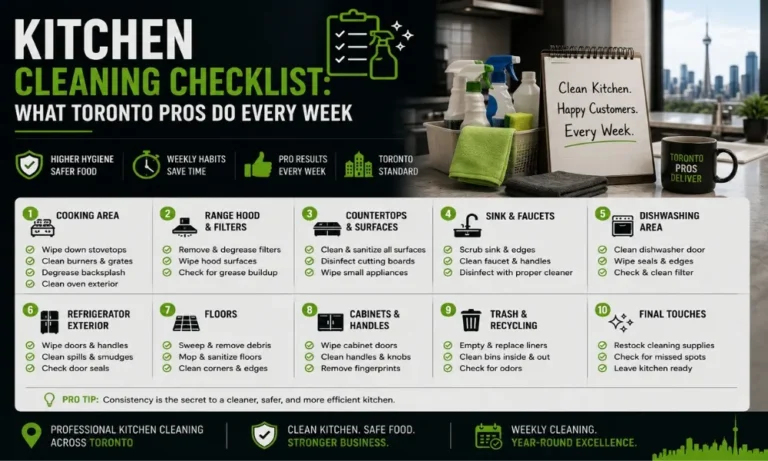
Deep cleaning goes beyond visible surfaces and targets hidden grease, dirt, and buildup in areas that are often overlooked.
- Cleaning behind appliances
- Scrubbing oven interiors
- Degreasing cabinet doors
- Cleaning exhaust fan filters
- Sanitizing hard-to-reach areas
Recommended Deep Cleaning Schedule
Most homes benefit from a professional kitchen deep clean every 3–4 months. Homes with large families or frequent cooking may require more frequent deep cleaning. Spring and fall are ideal seasons for a complete kitchen refresh.
Countertops & Backsplash Toronto GTA
Countertops are one of the first things people notice in a kitchen, but they are also one of the areas most affected by improper cleaning. The right products make a big difference, especially depending on the type of surface you have.
Granite countertops are porous and can be damaged by acidic cleaners, so avoid vinegar, lemon juice, and bleach. A pH-neutral stone cleaner or a simple mix of warm water and mild dish soap works best. Always dry the surface right away to help prevent water marks.
Quartz countertops are easier to maintain but still need gentle care. Avoid harsh chemicals and use a mild all-purpose cleaner for everyday cleaning. For a deeper clean, choose a non-abrasive product with a soft cloth.
Laminate countertops are more durable but can scratch easily, so avoid steel wool and rough scrubbing pads. Use gentle cleaners to keep the surface looking fresh.
For backsplashes, focus on the grout lines where grease and food particles often collect. A baking soda paste with a stiff grout brush can remove buildup effectively. Around the stove area, a quality degreaser followed by a proper rinse can help restore a cleaner, fresher look.
Deep Clean Your Kitchen Appliances Like a Pro
Appliances are where deep cleaning makes the biggest impact. Follow these proven cleaning methods to remove grease, eliminate odors, improve efficiency, and extend appliance lifespan.
Oven Cleaning
Remove racks and soak them in hot soapy water. Apply a baking soda and water paste to interior surfaces and leave overnight before wiping clean.
- Soak racks separately
- Use baking soda paste overnight
- Spray vinegar on stubborn spots
- Clean glass door thoroughly
Fridge Cleaning
Empty the refrigerator completely and wash removable shelves and drawers using warm soapy water.
- Remove all food items
- Wash shelves and drawers
- Use baking soda solution inside
- Clean door seals carefully
Microwave Cleaning
The steam method is one of the easiest ways to loosen food splatter and remove lingering odors.
- Add water and lemon slices
- Heat for 3–5 minutes
- Allow steam to loosen residue
- Wash turntable separately
Dishwasher Cleaning
Even dishwashers need regular cleaning to prevent odors, mineral buildup, and poor cleaning performance.
- Remove and rinse the filter
- Run vinegar cleaning cycle
- Add baking soda afterward
- Run a short hot cycle
Cabinets and Drawers in Toronto GTA
It is easy to overlook cabinet exteriors during cleaning, but they slowly collect a greasy film over time, especially the cabinets closest to the stove. This buildup comes from airborne cooking grease mixed with dust, and it often appears faster than people expect.
For wood cabinets, you can use a diluted dish soap solution with a soft cloth. Avoid using too much water, as it can damage or warp the wood, and always dry the surface right after wiping. If the grease is stubborn, a small amount of vegetable oil rubbed on first can help loosen the buildup before cleaning it away.
For laminate or painted cabinets, a general-purpose degreaser spray usually works well. It is always a good idea to test it on a small hidden spot first to make sure it does not affect the finish.
Do not overlook cabinet handles and hinges either, since they are touched frequently and can collect bacteria. Inside the cabinets, remove everything, wipe down the shelves, check for expired items, and replace old shelf liners if needed. Drawer interiors should also be emptied, cleaned, and fully dried before you put everything back. A simple example is a kitchen junk drawer, which can quickly collect crumbs and dust without regular attention.
Sink and Drains in Toronto GTA
It is easy to overlook the kitchen sink, even though it gets more daily use than almost any other surface in the home. For some reason, it is often one of the most under-cleaned areas.
For stainless steel sinks, sprinkle baking soda across the basin and scrub gently with a damp cloth following the grain. Rinse well and buff it dry. To remove water spots and bring back the shine, rub a small amount of olive oil with a paper towel.
For ceramic or porcelain sinks, a cream cleanser or diluted bleach solution works effectively. Just avoid abrasive scrubbers, as they can leave scratches on the surface.
The drain also needs regular care. Pour half a cup of baking soda down the drain, followed by half a cup of white vinegar. Cover it and let it fizz for fifteen minutes, then flush it with boiling water. This helps break down grease buildup and control odors, which is especially useful in Toronto homes where hard water can speed up mineral deposits.
Clean the faucet and handles with a cloth soaked in white vinegar to remove limescale. A toothbrush can make it easier to clean the small, hard-to-reach areas around the faucet base.
It is also worth checking under the sink. Remove stored items, wipe the cabinet interior, and look for any signs of moisture or leaks before they turn into a bigger problem.
Exhaust Fan and Ventilation in Toronto GTA
It is easy to forget about the exhaust fan or range hood, but it is actually your kitchen’s first line of defense against grease, smoke, and unwanted odors. It is also one of the areas that often gets missed during regular cleaning.
We recommend removing the grease filters and soaking them in hot water with dish soap and baking soda for at least fifteen to twenty minutes. After soaking, scrub them with a brush and rinse thoroughly. If the filters are aluminum, they can also go through a dishwasher cycle for easier cleaning.
Wipe the outside of the hood and the fan housing using a degreaser spray and a microfiber cloth to remove buildup and keep the surface fresh.
Toronto kitchens that cook often, especially those that fry food regularly, should clean their exhaust filters once a month. For homes with lighter cooking habits, cleaning them every two to three months is usually enough.
A clogged exhaust fan does more than spread grease around your kitchen. It can also affect the air quality in your home, which matters when Toronto families spend so much time indoors during the long winter months. Keeping it clean is a small task that can make a noticeable difference.
How Often Should Toronto Homes Deep Clean Their Kitchen?
It really depends on how often you cook and the size of your household. A busy kitchen that prepares meals every day will usually need more frequent cleaning than a home where cooking happens less often.
- Families with children or households that cook daily should deep clean every six to eight weeks.
- Couples or professionals who cook a few times a week will be well-served by a deep clean every three months.
- Couples or professionals who cook a few times a week will be well-served by a deep clean every three months.
When to Call a Professional Kitchen Cleaner in Toronto
It can be frustrating when a DIY deep clean does not deliver the results you expect. If your oven has years of baked-on grease, your exhaust fan filter is covered with stubborn buildup, or you are getting a home ready for sale or a move-out inspection, a professional kitchen cleaning service can make a noticeable difference.
When to Call a Professional Kitchen Cleaner in Toronto
It can be frustrating when a DIY deep clean does not deliver the results you expect. If your oven has years of baked-on grease, your exhaust fan filter is covered with stubborn buildup, or you are getting a home ready for sale or a move-out inspection, a professional kitchen cleaning service can make a noticeable difference.
417/