Grease Trap Cleaning for Toronto Restaurants: Complete Guide
It is something anyone who has run a restaurant kitchen understands: there is a whole hidden world of maintenance that customers never see and rarely think about. Grease trap cleaning is one of those essential tasks. It sits quietly under a sink or buried outside near the back door, doing the unglamorous work that keeps your kitchen running smoothly and your plumbing from becoming a nightmare.
Ignore it for too long, and it can quickly turn into one of the messiest, smelliest, and most expensive problems a restaurant owner can face. If you operate a kitchen anywhere in Toronto or across the GTA, what should you know? Here is everything you need to understand about grease traps, why they matter so much, and how to stay on the right side of the city’s bylaws.
What a Grease Trap Actually Does?
It happens every time you wash dishes, rinse a pan, or clean the fryer station, fats, oils, and grease flow down the drain along with the water. A grease trap is designed to capture that fat, oil, and grease before it reaches the municipal sewer system. As warm water and grease enter the trap, the water cools, allowing the grease to separate and float to the top while solids settle at the bottom. Cleaner water then continues into the sewer line.
It may sound simple, and it is, but it only works if the trap is emptied and cleaned regularly. Once it fills up, grease starts passing straight through into the pipes, and that is when the real trouble begins. A little routine maintenance can make all the difference.
Why This Matters More Than Most Owners Realize
A neglected grease trap rarely stays a small problem. What starts as a maintenance issue can quickly lead to operational disruptions, customer complaints, pest activity, and costly compliance issues.
Sewer Backups & Drain Overflows
When grease accumulates inside pipes and interceptors, wastewater can no longer flow properly. The result may be sink overflows, blocked floor drains, and sewage backups that disrupt service and create serious health concerns.
Persistent Kitchen Odors
Grease and food waste trapped inside the system begin to decompose over time, creating odors that spread throughout the kitchen and customer-facing areas.
Increased Pest Activity
Grease and organic waste provide an attractive food source for cockroaches, rodents, and other pests, making infestations more likely and harder to control.
Fines & Legal Consequences
Failure to properly maintain grease traps can lead to regulatory action, financial penalties, operational disruptions, and increased scrutiny from local authorities.
Small Maintenance Issues Can Become Expensive Emergencies
Regular grease trap cleaning helps prevent plumbing failures, unpleasant odors, pest activity, and compliance problems before they affect your staff, customers, and daily operations.
Toronto’s Grease Trap Bylaws
It is important for all food service establishments in Toronto to have a properly sized grease trap or interceptor installed and maintained. This requirement falls under the city’s sewer use bylaw, which helps protect the municipal wastewater system from the blockages caused by grease.
Restaurants are expected to clean their grease traps on a regular schedule, and in many cases, the city requires proof that the cleaning has been completed. This usually comes in the form of a manifest or service report from a licensed waste hauler, showing the service date and the amount of grease removed.
The cleaning frequency depends on the size of your grease trap and the volume of your kitchen. Many Toronto restaurants schedule cleaning every one to three months, while busier kitchens with heavy fryer use often need service more frequently. A reliable service provider can help determine the right schedule based on your actual usage, which makes the process much easier.
They do conduct inspections to enforce these bylaws, and restaurants without proper documentation may face fines. Beyond meeting legal requirements, insurance companies also review maintenance records if a sewage backup leads to a claim, so keeping your records up to date helps protect your business in more ways than one.
Toronto Fire Code Requirements You Cannot Ignore
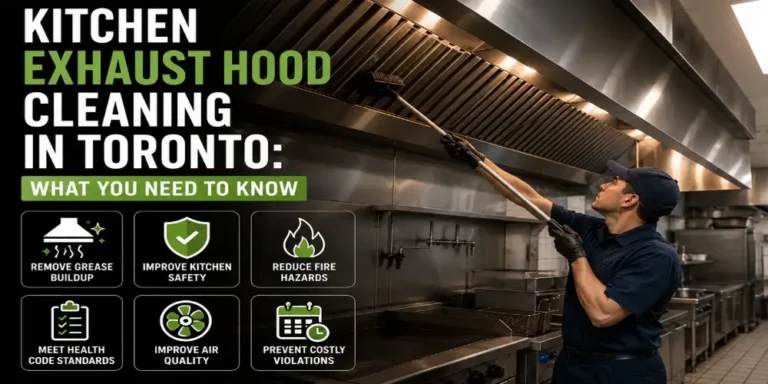
It is something fire inspectors in Toronto and across the GTA regularly check. If your exhaust system is not cleaned and documented on the proper schedule, you could face fines, failed inspections, and in the worst cases, your insurance provider may deny a claim after a fire because you cannot prove regular maintenance was completed. That can be a heartbreaking situation for any business owner after everything invested in a restaurant.
What Professional Grease Trap Cleaning Involves
A proper grease trap cleaning goes far beyond removing visible grease. Licensed service providers clean, inspect, document, and properly dispose of waste to help maintain compliance and protect your plumbing system.
Full Pump Out
The entire trap is emptied, including accumulated grease, oils, wastewater, and settled solids. A proper service removes everything, not just the surface layer.
Wall & Baffle Scraping
Grease adheres to internal walls and baffles. These surfaces must be scraped and cleaned thoroughly to restore the trap’s efficiency.
System Inspection
The trap is inspected for cracks, leaks, structural wear, and other issues that could reduce performance or lead to costly repairs later.
Approved Waste Disposal
Collected grease waste is transported to approved processing facilities where it can be recycled or disposed of according to regulations.
Service Manifest
Documentation is provided showing service details, disposal records, and proof of compliance for future inspections or insurance requests.
What You Should Expect From a Licensed Provider
Every professional grease trap service should include the following components.
A Missing Paper Trail Is a Major Red Flag
If a company cannot explain where the waste is transported, fails to provide a service manifest, or skips compliance documentation, consider it a warning sign. Proper cleaning is only complete when the service and disposal records are documented correctly.
Signs Your Grease Trap Needs Attention Sooner
It is often easy to spot a few warning signs that mean it may be time to call for service before your regular schedule comes around. Slow draining sinks, gurgling sounds from the drains, a persistent foul smell near the kitchen sink or outside near the trap, and visibly rising grease levels, if you can check the trap yourself, are all signs worth taking seriously. When in doubt, it is always better to call early than to wait for a backup to force the issue, wouldn’t you agree?
Serving Kitchens Across Toronto and the GTA
It does not matter whether your restaurant is in downtown Toronto, Etobicoke, Scarborough, North York, Mississauga, or Brampton, the same bylaw requirements and real-world risks apply when grease traps are neglected. A reliable local service provider understands Toronto’s specific bylaw expectations and can schedule cleanings around your operating hours, so your kitchen never has to close or pause service for maintenance. Isn’t that one less thing to worry about?
Protecting the Business You Have Built
It is easy to think of grease trap cleaning as just another line item, another appointment to schedule between everything else that comes with running a restaurant. But behind that simple task is something much bigger. It protects your plumbing, your reputation, your relationship with the city, and the trust your customers place in you every time they sit down at your tables.
It may seem like a small routine, but staying ahead of grease trap maintenance is a consistent habit that helps you avoid some of the toughest days a restaurant owner can face. It is worth the attention, and it is worth doing right.